
Corporate Tax Filing Deadlines in Malaysia 2026: Form C, CP204 & e-Filing Guide
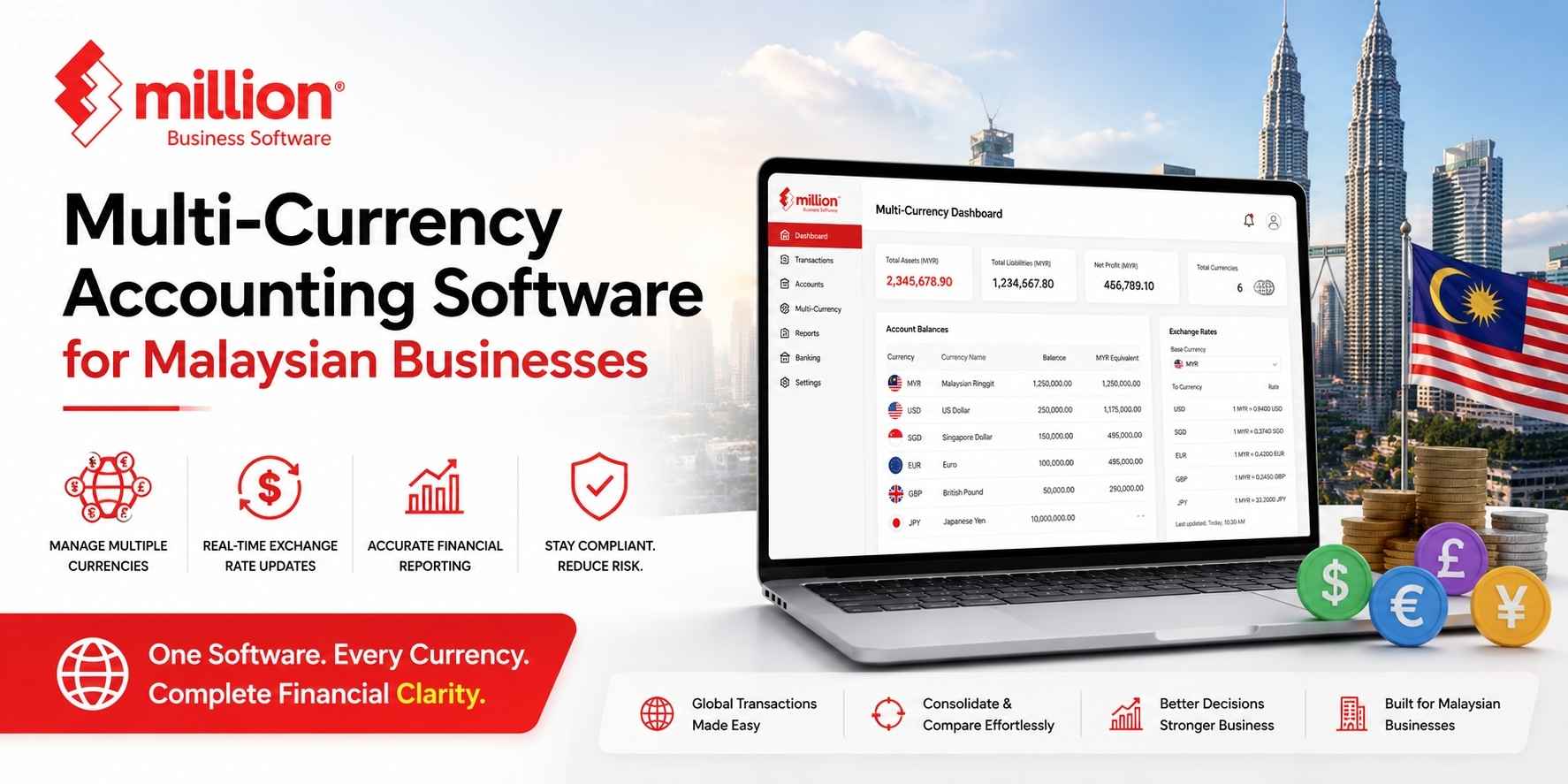
Multi-currency accounting software lets a business record, invoice, and report transactions in currencies other than Malaysian Ringgit, while automatically converting them to MYR for tax, SST, and financial reporting purposes using either live or fixed exchange rates. For Malaysian SMEs that import stock, export goods, or invoice overseas clients, this isn’t a “nice to have” feature, without it, every foreign transaction has to be manually converted and reconciled, which is slow and prone to costly rounding and exchange-rate errors.
Who Actually Needs Multi-Currency Accounting
- Importers paying overseas suppliers in USD, CNY, or other foreign currencies
- Exporters and manufacturers invoicing overseas buyers directly
- Malaysian service businesses (agencies, consultancies, SaaS) billing international clients
- E-commerce sellers on cross-border marketplaces settling in foreign currency before conversion to MYR
What Good Multi-Currency Accounting Software Actually Does
- Records the original transaction currency, not just a converted MYR figure, so the original invoice/PO stays accurate for audit and dispute purposes
- Applies exchange rates automatically — either live rates pulled in real time, or a fixed rate set for a period, depending on business policy
- Calculates realised and unrealised exchange gains/losses , critical for accurate profit reporting when a foreign invoice is raised in one month and paid in another at a different rate
- Reports correctly in MYR for SST and LHDN purposes, regardless of the transaction currency, statutory reporting still needs to convert cleanly to Ringgit
- Handles multi-currency bank accounts, for businesses holding foreign currency balances, not just converting on paper
The Risk of Managing Foreign Currency Transactions Manually
- Manual spreadsheet conversion using outdated or inconsistent exchange rates leads to reporting errors
- Untracked exchange gains/losses distort the real profit margin on international deals
- SST and e-Invoice compliance requires accurate MYR figures, a manual conversion mistake can cascade into a compliance issue, not just a bookkeeping one.
What to Check Before Choosing Multi-Currency Accounting Software
- Does it support the specific currencies your business actually trades in?
- Does it let you choose between live and fixed exchange rates, or force one method?
- Does it clearly separate realised vs unrealised gains/losses in reporting?
- Does it still produce clean, correctly converted SST and e-Invoice-ready records in MYR?
- Is multi-currency support included as standard, or a paid add-on module?
Multi-Currency as Part of a Bigger Compliance Picture
- For most Malaysian SMEs, multi-currency accounting isn’t used in isolation, it needs to work alongside invoicing, e-Invoice/MyInvois compliance, and multi-company reporting if the business operates more than one entity.
- Read this guide for businesses running multiple entities alongside foreign currency transactions,and this guide for the compliance layer.
FAQ
Q: What is multi-currency accounting software?
A: It’s accounting software that records transactions in their original foreign currency while automatically converting them to the local currency (MYR, for Malaysian businesses) for reporting and compliance purposes.
Q: Does a Malaysian business need multi-currency accounting if it only occasionally deals in foreign currency?
A: It depends on volume and risk tolerance, occasional foreign transactions can sometimes be handled manually, but businesses with regular import/export activity or overseas clients benefit significantly from automated conversion and exchange gain/loss tracking.
Q: What’s the difference between realised and unrealised exchange gain or loss?
A: An unrealised gain or loss occurs when an invoice is raised in foreign currency but not yet paid, and the exchange rate has moved since it was issued; a realised gain or loss is locked in once the payment is actually received or made at the rate on that date.
Q: Does multi-currency accounting affect SST or e-Invoice compliance?
A: Yes, regardless of the transaction currency, SST and e-Invoice reporting still needs to reflect accurate MYR figures, so the accuracy of the currency conversion directly affects compliance accuracy.
Q: Can accounting software use live exchange rates automatically?
A: Many multi-currency accounting systems can pull live exchange rates automatically, though some businesses prefer a fixed rate for a set period for consistency in reporting — the right choice depends on internal finance policy.

Related posts


